
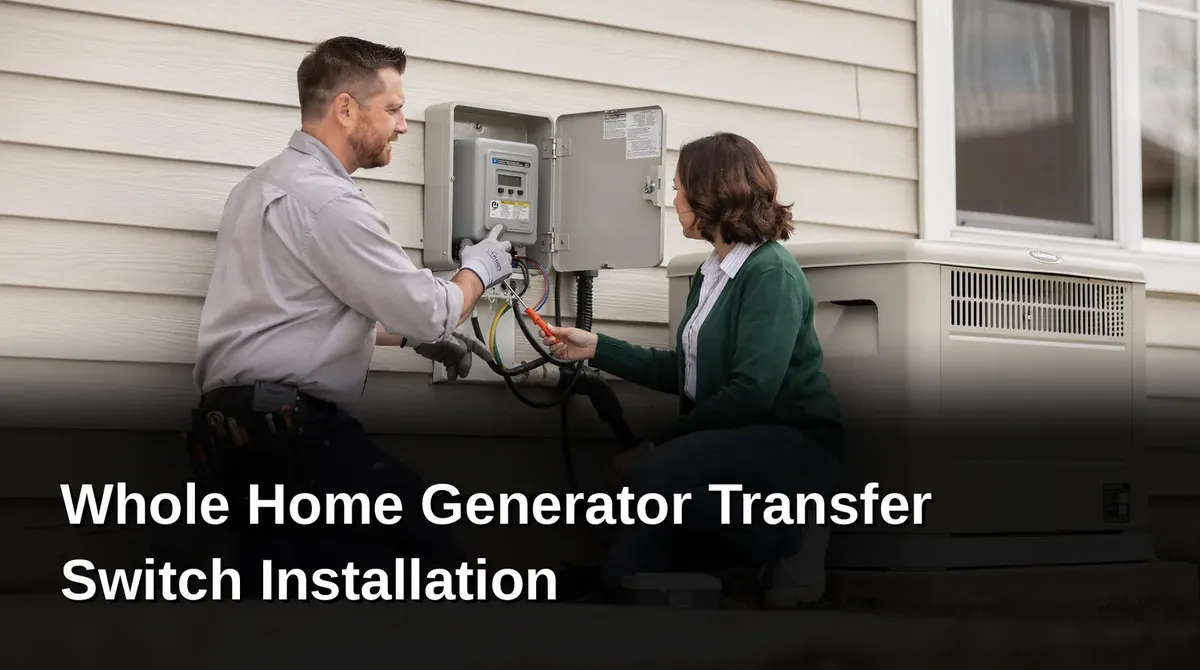
A generator transfer switch safely connects a backup generator to a home’s electrical system while preventing dangerous backfeeding into utility lines. ABE’S Electric, a licensed electrical contractor serving Central Florida, provides professional automatic transfer switch installations as part of its standby generator services. These systems detect utility outages and automatically transfer electrical loads to generator power once the generator is ready, providing reliable backup power without manual intervention.
Key Takeaways
- A whole-home generator transfer switch connects a standby generator to a home’s electrical system, allowing backup power to supply the main electrical panel based on the generator’s capacity.
- A transfer switch prevents generator power from backfeeding into utility lines, protecting utility workers, electrical equipment, and the home’s electrical system.
- An automatic transfer switch detects utility power loss and works with the standby generator to restore backup power without homeowner intervention once the generator is ready.
- A manual transfer switch requires the homeowner to start the generator and manually switch the electrical supply from utility power to generator power during an outage.
What is a whole-home generator transfer switch?
A whole-home generator transfer switch connects a standby generator to a home’s electrical system, allowing backup power to supply the main electrical panel rather than a limited selection of circuits. The amount of power available depends on the generator’s capacity, and some installations may require load management to prevent overloading the system. The transfer switch safely manages the connection between two electrical sources: utility power and generator power.
To prevent dangerous backfeeding, the transfer switch disconnects the home from one power source before connecting it to the other. This ensures that utility and generator power cannot supply the home’s electrical system simultaneously. Without this protection, electricity from the generator could flow back into utility lines, creating serious safety hazards for utility workers and potentially damaging electrical equipment.
How does a transfer switch protect a home?
The transfer switch is a critical safety component that prevents utility power and generator power from feeding the home’s electrical system simultaneously. By isolating these power sources, it protects utility workers, homeowners, and electrical equipment from dangerous backfeeding. When properly installed by a licensed electrician, a transfer switch also helps ensure the standby generator system operates safely, reliably, and in compliance with applicable electrical codes.
What does a whole-home transfer switch power?
A whole-home generator configuration supplies backup power to the home’s main electrical panel, allowing connected circuits to operate within the generator’s capacity. Depending on the system’s size and design, homeowners may need to limit certain electrical loads or use automatic load-management equipment to prevent overloading. A properly sized system can support major appliances, HVAC equipment, lighting, and other essential household circuits.
ABE’S Electric provides professional standby generator and transfer switch installations for residential and commercial properties throughout Central Florida, including Orlando, Kissimmee, St. Cloud, and surrounding communities. The company’s standby generator installation services include load calculations, permitting, and transfer switch work in Orlando, Kissimmee, and surrounding areas.
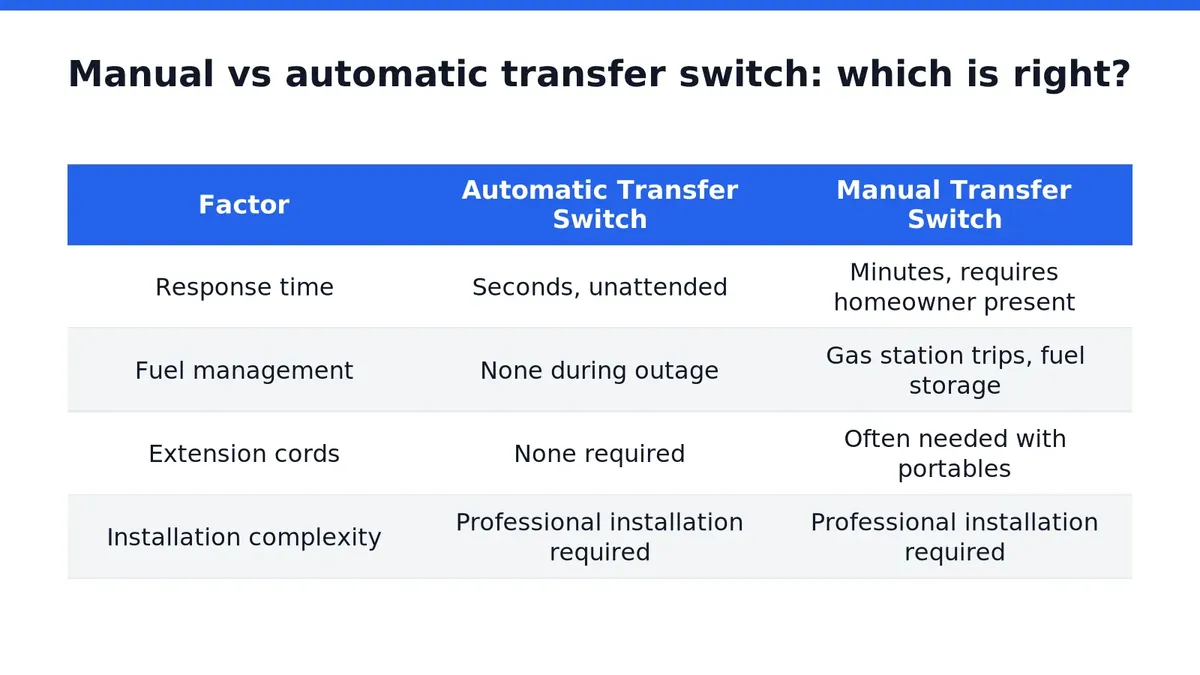
Manual vs. automatic transfer switch: which is right?
Choosing between a manual and an automatic transfer switch is an important decision when planning a home backup power system. Manual transfer switches typically cost less but require homeowner intervention during an outage. Automatic transfer switches provide greater convenience by restoring backup power without manual operation, making them particularly beneficial during severe weather or when no one is home.
How does an automatic transfer switch work during an outage?
An automatic transfer switch connects a standby generator to a home’s electrical system, allowing backup power to be supplied without homeowner intervention. When utility power fails, the system detects the outage and initiates the generator’s startup sequence. Once the generator is running and its output has stabilized, the transfer switch safely redirects the home’s electrical load to generator power. This process typically takes several seconds to tens of seconds, depending on the equipment and its settings. When utility service is restored and stabilized, the switch automatically transfers the electrical load back to the utility supply.
What does a manual transfer switch require from the homeowner?
A manual transfer switch requires the homeowner to operate the backup power system during an outage. This typically involves starting the generator and manually switching the home’s electrical supply from utility power to generator power. When utility service returns, the homeowner must reverse the process to restore normal operation. Manual transfer switches are commonly paired with portable generators, which may require periodic refueling during extended outages. In contrast, automatic standby generators typically use natural gas or propane, reducing the need for manual intervention, although fuel availability and consumption remain important considerations.
Which transfer switch type fits Florida storm preparedness?
The comparison table below outlines the practical differences for Central and West Florida homeowners:
| Factor | Automatic Transfer Switch | Manual Transfer Switch |
|---|---|---|
| Response Time | Starts and transfers power automatically, typically within seconds to tens of seconds. | Requires homeowner intervention; timing varies. |
| Fuel Management | Typically uses natural gas or propane. Fuel availability and consumption remain considerations. | Often uses a portable generator requiring periodic refueling. |
| Extension Cords | Not needed for circuits connected through the transfer switch. | Not needed for connected circuits when using a properly installed generator inlet and transfer switch. |
| Installation | Professional installation required. | Professional installation required. |
Installing an automatic transfer switch as part of a standby generator system helps Florida homeowners prepare for unexpected power outages, particularly during hurricane season. Unlike portable generators, automatic standby systems restore backup power without requiring homeowners to operate equipment manually. ABE’S Electric provides professional standby generator and automatic transfer switch installations for residential and commercial properties throughout Central Florida, including Orlando, Kissimmee, St. Cloud, and surrounding communities.
For homeowners seeking a more affordable backup power solution, a manual transfer switch remains a practical option. Although manual systems typically have lower upfront costs, they require someone to be present to start the generator and switch between power sources. Automatic systems offer greater convenience and peace of mind, particularly during severe weather, extended outages, or when homeowners are away.
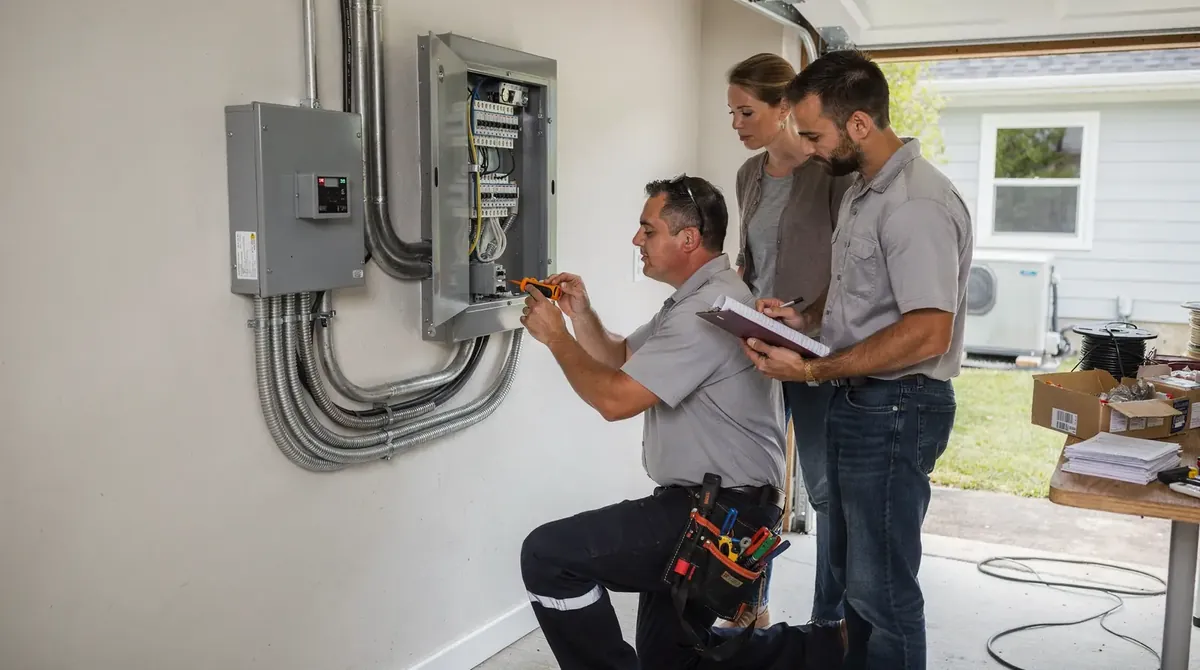
What affects generator transfer switch installation costs?
Generator transfer switch costs vary depending on the switch’s amperage rating, voltage, type, and installation requirements. Both manual and automatic transfer switches provide a safe, code-compliant way to connect a generator to a home’s electrical system, but they differ in functionality, equipment costs, and installation complexity. The total cost also depends on the home’s existing electrical infrastructure and whether the installation supports selected circuits or the entire electrical panel.
A whole-home generator transfer switch rated for 200-amp service typically costs more than a basic 30-amp manual switch designed to power a limited number of circuits. Automatic transfer switches also incorporate electronic controls that detect power outages and manage the transition between utility and generator power, increasing equipment costs compared to manual models. ABE’S Electric provides professional transfer switch installations throughout Central Florida, helping homeowners select equipment that meets their electrical needs, generator capacity, and budget.
What factors influence automatic transfer switch installation pricing?
Installation complexity is a significant factor in determining labor costs. An automatic transfer switch installation requires proper integration with the home’s utility service, standby generator, and main electrical panel. Depending on the electrical system’s configuration, a service-entrance-rated transfer switch may be installed near the utility meter or main service panel, while other installations may use a separate disconnect or different wiring arrangement. These installations can require additional materials, electrical modifications, utility coordination, and permitting, making them more complex and potentially more expensive than installing a manual transfer switch designed to power only essential circuits.
How does a manual vs. automatic transfer switch affect total cost?
Manual transfer switches typically have lower upfront costs because they do not include the voltage-sensing controls and automatic switching mechanisms found in automatic models. During an outage, homeowners must start the generator and manually transfer the electrical load from utility power to generator power. Automatic transfer switches, by comparison, detect utility power loss and work with the standby generator to restore backup power without homeowner intervention. The additional equipment and potentially more complex installation requirements generally make automatic systems more expensive, but they provide greater convenience and reliability during unexpected outages.
How can a standby generator transfer switch installation be more affordable?
ABE’S Electric provides written estimates for every project, so pricing remains transparent from the outset. The company offers financing through an online application for electrical financing, allowing homeowners to spread the cost of a standby generator transfer switch installation in Florida over manageable payments. Senior and military discounts further reduce the overall generator transfer switch cost for qualifying customers.
How is a standby generator transfer switch installed?
A standby generator transfer switch installation begins with a comprehensive on-site electrical assessment. ABE’S Electric evaluates the property’s electrical system, determines the appropriate transfer switch rating, and assesses the generator’s capacity to support the home’s power requirements. Proper sizing is essential to ensure the equipment can safely handle the connected electrical loads and provide reliable backup power during an outage.
Once the assessment is complete, the installation follows a structured process coordinated by a licensed electrical contractor to ensure safety, proper operation, and compliance with applicable electrical codes.
What happens before the physical installation starts?
Before installation begins, ABE’S Electric reviews the project’s requirements, obtains the necessary permits, and coordinates with the local building department and utility provider when applicable. Inspections are scheduled according to local requirements to ensure the installation complies with the Florida Building Code and applicable electrical safety standards.
- Complete the on-site electrical assessment. A licensed electrician evaluates the home’s electrical panel, service capacity, and backup power requirements. This assessment determines the appropriate transfer switch rating and verifies compatibility with the generator and connected electrical loads.
- Obtain permits and coordinate with the utility provider. ABE’S Electric secures the required permits and coordinates any necessary utility disconnections, reconnections, and inspections to ensure the installation meets local electrical codes.
- Prepare the generator site. For complete standby generator installations, a suitable mounting pad is prepared according to manufacturer specifications and applicable codes. If the generator operates on natural gas or propane, the appropriate fuel connections are coordinated with qualified professionals.
- Install and connect the transfer switch. The transfer switch is mounted at an appropriate location, typically near the main electrical panel or utility service entrance, depending on the system’s configuration. Electrical connections are established between the generator, transfer switch, and home’s electrical distribution system.
- Perform system startup and testing. Once installation is complete and the necessary approvals are obtained, the system is tested under simulated power outage conditions. The electrician verifies proper operation, safe transfer between power sources, and the generator’s ability to support the intended electrical loads.
- Conduct the homeowner walkthrough. The technician explains how the backup power system operates, reviews applicable manual operating procedures, and demonstrates essential indicators and basic troubleshooting steps. This ensures the homeowner understands how to operate and monitor the system safely.
How long does the full installation process take?
The timeline for a standby generator transfer switch installation in Florida depends on the scope and complexity of the project. Installing a transfer switch alone may require less time than a complete standby generator installation, which can involve site preparation, fuel connections, permitting, and inspections. Additional factors, such as concrete pad curing times and local permitting requirements, can also affect the schedule. ABE’S Electric coordinates each phase of the installation process, from the initial electrical assessment through final testing and the homeowner walkthrough. The total installation cost reflects the project’s specific requirements, including equipment, labor, permits, inspections, and any necessary site preparation or fuel-system coordination.
Why choose a standby generator transfer switch in Florida?
A standby generator transfer switch helps Florida homeowners maintain essential electrical services during hurricane season and unexpected power outages. When paired with a properly sized standby generator, an automatic transfer switch allows backup power to restore operation to important household systems, including refrigeration, air conditioning, lighting, and security equipment. By safely connecting the generator to the home’s electrical system while isolating it from utility power, the transfer switch helps ensure reliable backup operation and compliance with applicable electrical codes.
What does a transfer switch actually do?
Two power sources cannot feed the same electrical panel simultaneously. The transfer switch isolates generator power from utility lines, preventing dangerous backfeed that threatens line workers and damages equipment. When utility power returns, the switch safely transitions the home back to grid electricity.
How does ABE’S Electric handle the installation process?
ABE’S Electric provides professional automatic transfer switch installation as part of its standby generator services for residential and commercial properties throughout Central Florida, including Orlando, Kissimmee, St. Cloud, and surrounding communities. The company also serves commercial and industrial clients in West Florida through its Bradenton location.
The installation process includes several essential steps:
- Evaluate electrical requirements. Assess the property’s electrical load, generator capacity, and existing electrical infrastructure to determine the appropriate transfer switch configuration.
- Install the transfer switch. Mount the equipment in a suitable location based on the electrical system’s design and applicable code requirements.
- Connect the electrical system. Configure the transfer switch to supply either selected circuits or the main electrical panel, depending on the installation.
- Test and verify operation. Simulate a utility power outage to confirm proper generator startup, automatic power transfer, and safe reconnection to utility power.
When choosing between a manual and an automatic transfer switch, homeowners should consider convenience, cost, and their household’s backup power requirements. Manual systems require someone to start the generator and operate the switch during an outage. Automatic systems perform these functions without homeowner intervention, making them particularly beneficial during severe weather or when residents are away.
A whole-home generator transfer switch allows backup power to supply the home’s main electrical panel, although the generator’s capacity determines which appliances and circuits can operate simultaneously. Additional equipment, such as automatic load-management modules and whole-home surge protection, may provide further functionality and electrical protection depending on the installation. Generator transfer switch costs vary based on equipment capacity, installation complexity, electrical modifications, and whether the system supplies selected circuits or the entire home.
ABE’S Electric is based in Kissimmee and handles this work throughout Kissimmee, FL and the surrounding Central Florida communities.