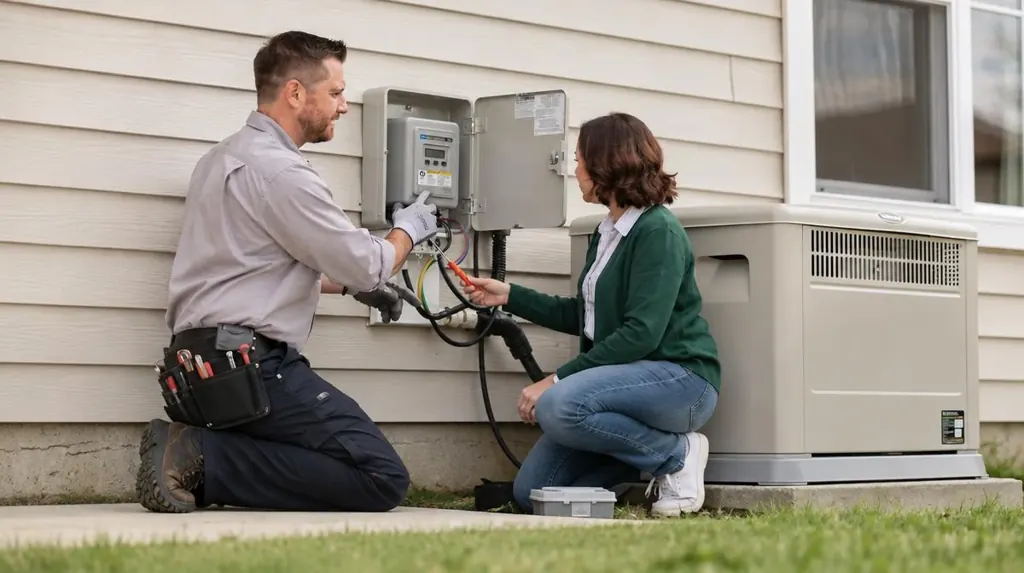
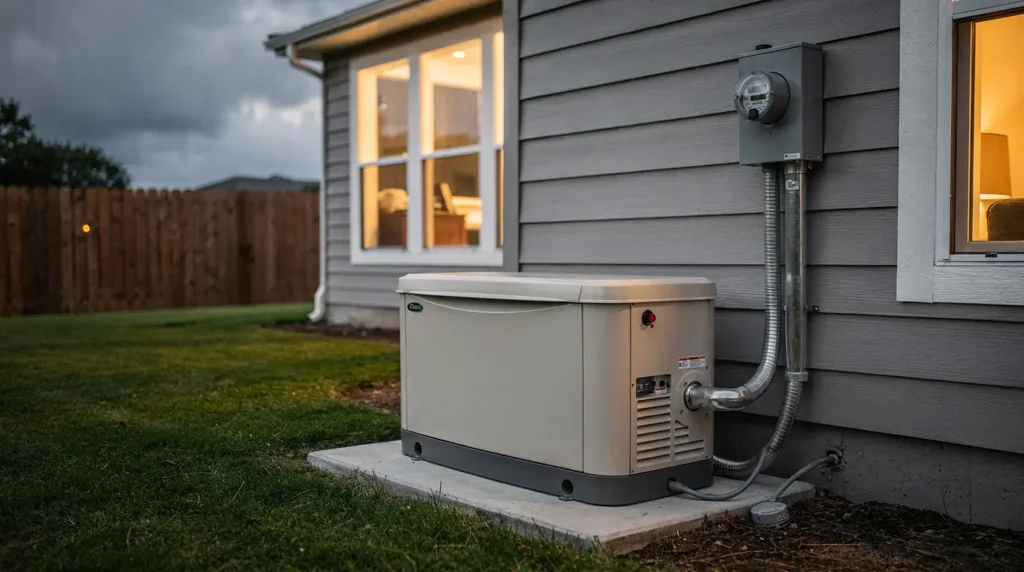
Generac standby generators operate as automatic backup power systems permanently connected to a property's electrical panel and fuel supply. Residential whole-home units protect single-family properties, while commercial-grade Generac systems, including three-phase and liquid-cooled configurations, support hotels, medical facilities, retail centers, and light-industrial operations throughout Central and West Florida. When utility power fails, the generator detects the outage within seconds and starts independently. The automatic transfer switch disconnects the property from the grid and routes generator power to essential circuits, restoring electricity without manual intervention. Learn more about our standby generator installation services.
Key Takeaways
- Continuous voltage monitoring lets a Generac standby system detect a utility outage and begin an automatic start sequence within seconds.
- The automatic transfer switch isolates the property from the grid and completes the power transfer in roughly 10 to 30 seconds.
- Whole-property and managed load-shedding transfer switch configurations let homeowners and commercial facilities size a generator correctly without oversizing the unit.
- Generac systems run on natural gas or liquid propane and perform automated self-test cycles on a weekly or bi-weekly basis to confirm readiness before storm season.
- When utility power returns, the system reconnects the grid, completes a cool-down cycle, and resets to standby automatically.
What Is a Generac Standby Generator?
A Generac standby generator is a permanently installed backup power system that automatically supplies electricity within seconds of a power outage. Generac has manufactured these systems since 1959, establishing the brand as a foundational name in backup power for homes and businesses. Residential whole-home models serve single-family properties, while commercial and light-industrial facilities rely on three-phase, liquid-cooled Generac units sized for higher continuous loads.
Unlike a portable generator that requires manual setup and fueling, a standby unit operates without operator intervention. The system senses the utility failure, starts itself, and delivers current through an automatic transfer switch that isolates the property from the grid. The unit sits permanently outside the structure, comparable in footprint to a central air conditioning condenser for a residential installation or a packaged mechanical unit for a larger commercial site.
ABE'S Electric provides generator installation for residential, commercial, and light-industrial clients across Central and West Florida, including Kissimmee, Orlando, and Bradenton. The electrical contractor handles load evaluation, transfer switch integration, permits, and utility coordination, and completes full system commissioning before the crew leaves the site.
Step-by-Step: What Happens During a Power Outage
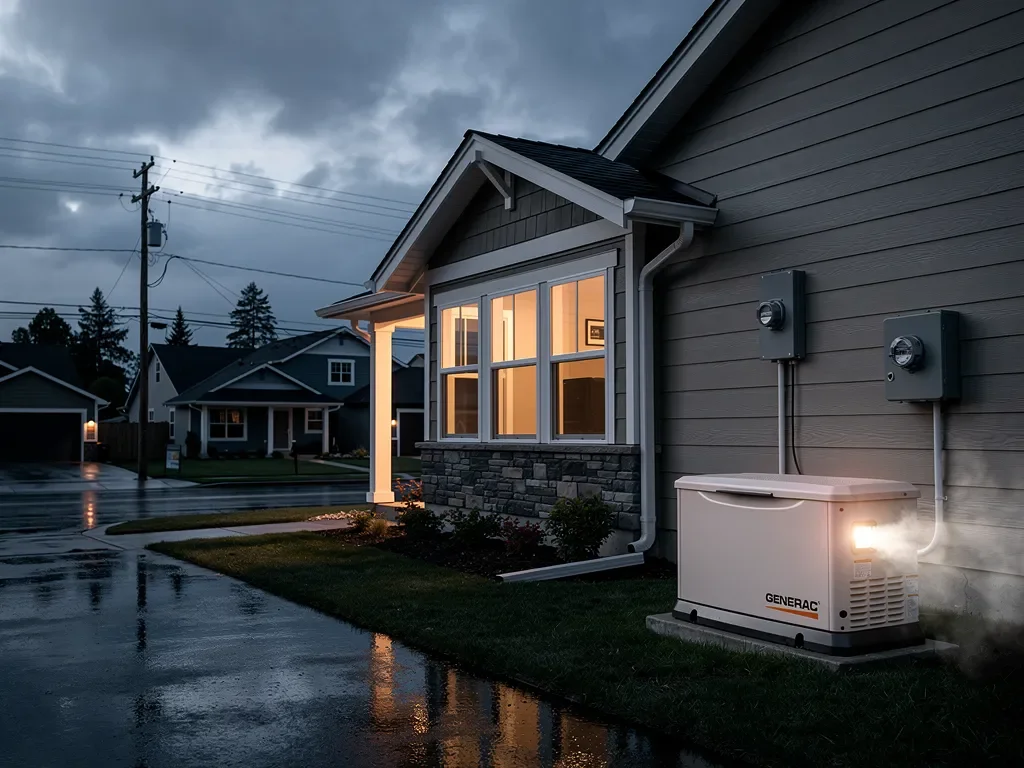
The sequence from utility failure to restored power follows a consistent, automated pattern across residential and commercial Generac standby systems. The steps below outline that sequence in order.
1. Continuous Voltage Detection
The generator's controller continuously monitors the incoming utility feed, sampling voltage multiple times per second. When voltage drops below a preset threshold or disappears entirely, whether from a storm-damaged line, a grid fault, or a lightning-induced surge, the controller registers the disruption immediately.
2. Automatic Engine Startup
Once the controller confirms a sustained outage, it signals the engine to start without any action from the property owner or facility manager. Generac's Home Standby Generator FAQ confirms the unit "automatically kick[s] on" moments after sensing a disruption. The generator operates whether the property is occupied or vacant, which matters during a Florida evacuation order that leaves a home or facility unattended for days.
3. ATS Grid Isolation & Power Transfer
After the engine reaches operating speed, typically within 10 to 30 seconds of the initial outage, the automatic transfer switch physically disconnects the property's electrical panel from the utility grid and connects it to the generator circuit. This isolation prevents backfeed, a dangerous condition in which generator power flows backward onto utility lines and endangers line workers making repairs.
4. Utility Power Return & Cool-Down Cycle
The controller continues monitoring the utility feed while the generator runs. When stable grid voltage returns, the transfer switch reverses the sequence: it reconnects the property to utility power and disconnects the generator. The unit then completes a brief cool-down cycle before shutting off. Generac's documentation states the system "shuts itself off and waits for the next outage," requiring no manual intervention from the owner or facility staff.
Core Components of a Generac Standby System
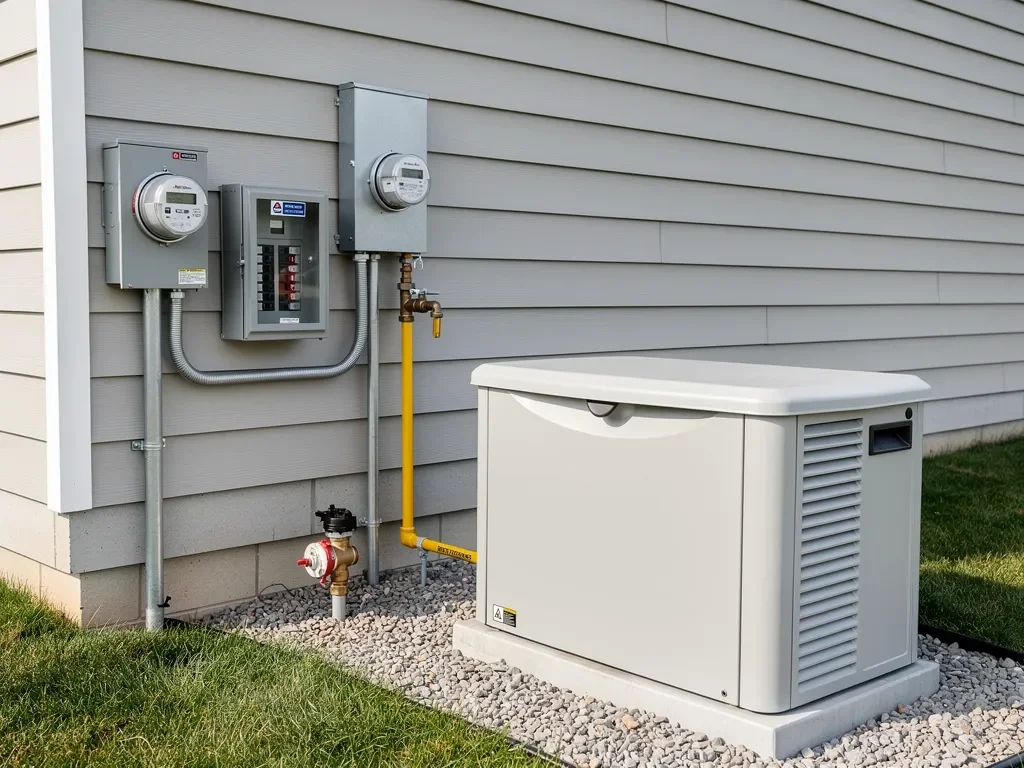
A Generac standby system combines several hardware components engineered to work together without manual operation.
Engine & Alternator
The core assembly pairs an internal combustion engine with an alternator that converts mechanical energy into electrical current. Residential units run on single-phase output sized for home electrical panels, while commercial and light-industrial installations use three-phase, liquid-cooled engines built for continuous higher-load operation.
Whole-Property vs. Load-Shedding Automatic Transfer Switches
A whole-property ATS backs up every circuit in the building simultaneously and requires a generator sized to carry the full connected load, including high-draw equipment such as central air conditioning or commercial HVAC. A managed load-shedding ATS instead prioritizes essential circuits and automatically sequences or sheds high-draw equipment, allowing a smaller, less expensive generator to support the same property without overloading. The comparison below outlines how the two configurations differ.
| Factor | Whole-Property ATS Coverage | Managed Load-Shedding ATS Coverage |
|---|---|---|
| Circuit coverage | Every circuit in the home or facility runs simultaneously | Essential circuits run first; high-draw equipment is sequenced or shed automatically |
| Generator sizing | Must be sized for the full connected load, including central A/C or commercial HVAC | Can use a smaller generator because peak demand is managed rather than carried in full |
| Best suited for | Properties that require full operational capacity during an outage | Properties seeking to control equipment cost without sacrificing essential power |
| Equipment cost | Higher, due to larger generator capacity requirements | Lower, due to reduced generator sizing requirements |
| High-draw equipment handling | Runs continuously as part of the full load | Cycled or sequenced to avoid overloading the generator |
Natural Gas vs. Liquid Propane Fuel Systems
Generac standby units run on either natural gas or liquid propane drawn from the property's existing fuel lines, eliminating manual refueling during an extended outage. Natural gas offers an uninterrupted supply tied to the utility line, while liquid propane depends on tank capacity and requires monitoring during a multi-day event. Because natural gas and liquid propane lines operate independently of overhead utility power lines, a grid outage typically does not interrupt fuel delivery to the generator.
Self-Test Cycles and Hurricane-Season Runtime
Generac standby systems perform an automated self-test exercise cycle on a pre-set weekly or bi-weekly schedule, running the engine briefly under no load to confirm the unit will start when needed. During an extended hurricane-season outage, the generator can run continuously for multiple days on a connected natural gas line; propane-fueled systems require owners or facility staff to monitor tank levels and arrange refueling to sustain multi-day runtime.
Why Generac Standby Power Matters for Florida Homes and Businesses
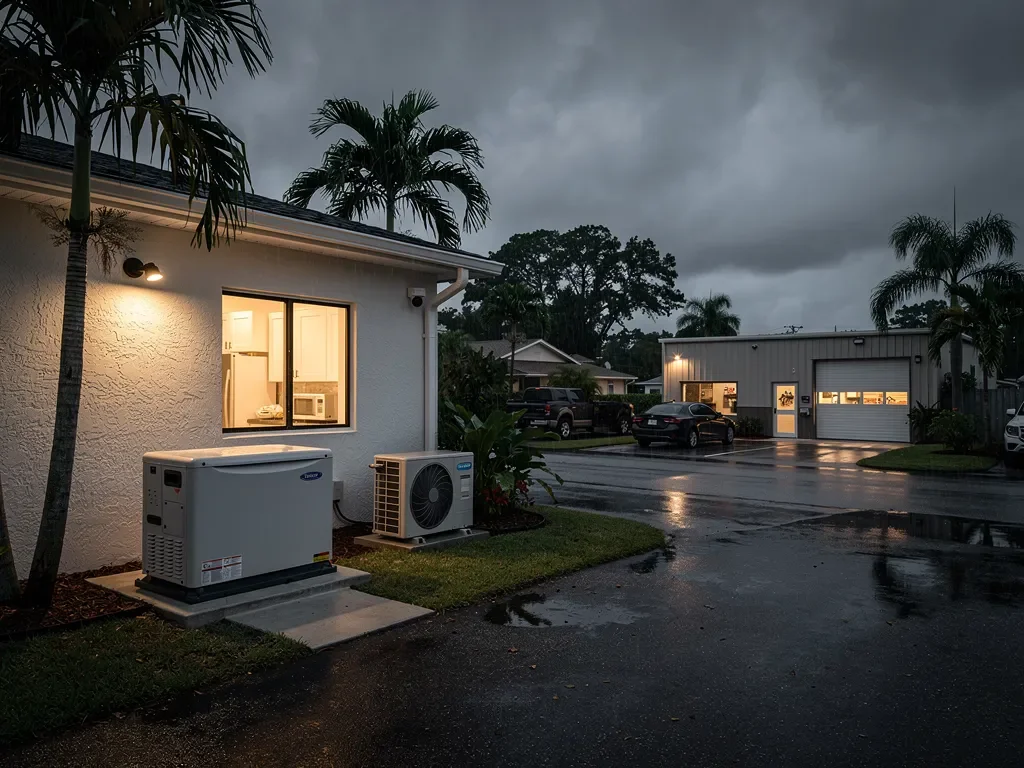
A Generac standby system provides automatic backup power within seconds of a utility failure. Florida's extreme weather makes that capability a practical necessity for homeowners and a continuity requirement for commercial and light-industrial operations alike. Without a standby generator, a property loses refrigeration, climate control, and security systems during an extended outage, a loss that compounds quickly in Florida's heat and humidity and can halt business operations entirely.
How Florida's Weather Threatens Property Power
Florida records some of the highest lightning activity in the country. Nearby strikes induce surges on utility and service lines even when a property itself avoids a direct hit. Each storm season brings the risk of a prolonged power outage that disables essential systems in a home or a commercial facility. An electrical contractor familiar with local conditions can assess a property's specific vulnerability before storm season arrives.
A standby generator addresses three critical needs during an outage:
- Refrigeration and HVAC systems keep food safe, medical inventory stable, and indoor temperatures livable
- Water heaters, sump pumps, and essential facility circuits remain powered automatically during utility outages
- Security alarms, cameras, and access control systems remain active when a property is most exposed
What Happens When Power Fails Without a Standby System
A standby generator keeps a property prepared, protected, and connected automatically. Residents and employees continue daily operations rather than scrambling for temporary solutions. ABE'S Electric installs whole-home and whole-facility surge protective devices as an additional defense against voltage spikes, a layered approach that protects both the generator investment and the property's connected electronics.
What Does Professional Generator Installation Involve?
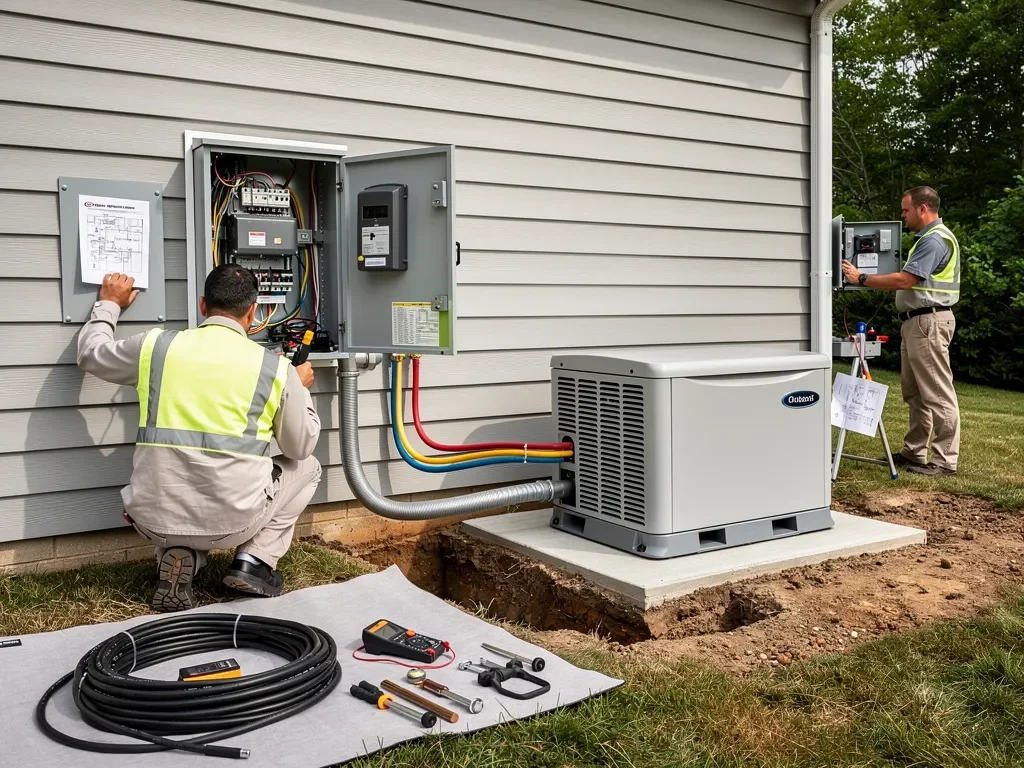
Professional generator installation is a multi-step engineering process, not a simple drop-off. A licensed electrical contractor performs a site load evaluation, secures permits, installs the automatic transfer switch, coordinates the fuel connection, and conducts full system testing before commissioning the unit. Skipping any of these steps creates compliance risks and leaves the system vulnerable to failure during a power outage.
Site Evaluation and Generator Sizing
The contractor measures a property's actual electrical demand by calculating the starting and running wattage of essential circuits, or, for a commercial facility, the full connected load of HVAC, refrigeration, and production equipment. This load evaluation prevents undersizing, which causes overload shutdowns, and oversizing, which wastes fuel and increases equipment cost. The assessment also identifies optimal placement for the unit, factoring in setback requirements, ventilation clearances, and proximity to the fuel source.
Permits, Inspections, and Utility Coordination
Permitting ensures the installation meets local building codes and manufacturer specifications, and both electrical and gas permits are typically required for a standby generator installation in Florida. The electrical contractor pulls all required permits and coordinates directly with the building department and utility company. Inspections verify proper grounding, transfer switch operation, and fuel line integrity before the system goes live.
The installation sequence follows a structured workflow:
- Load evaluation and sizing to match the generator to the property's actual residential or commercial demand
- Permit acquisition and utility coordination handled entirely by the contractor
- Automatic transfer switch installation, whole-property or managed load-shedding, to detect outages and switch power sources within 10 to 30 seconds
- Fuel line coordination for natural gas or liquid propane connections
- Startup, testing, and owner or facility walkthrough to confirm full system operation
ABE'S Electric, a family-owned electrical contractor serving Central and West Florida, performs this complete process for residential, commercial, industrial, government, and public-sector clients. Operating from its headquarters at 1004 Royal St in Kissimmee, the company supports projects across Orlando, Bradenton, and Central and West Florida, and the commercial electrical services team manages larger facility installations alongside residential work. Financing is available through an online application, and senior and military discounts apply.